 English
 Español
 日本語
日本語

A purchasing engineer is comparing two quotes for stainless steel screws in the same size, head style, and quantity. One supplier offers 410 stainless steel at a clearly lower unit price. The other specifies 316 stainless steel. Both products carry the same stainless steel label, so the temptation is to buy the cheaper one. The problem is that 410 and 316 are not interchangeable, and picking the wrong grade can mean rust stains, seized threads, or premature failure.
Here is the bottom line up front: choose 316 for any fastening point that will face moisture, chlorides, or chemical exposure; choose 410 when the service environment is dry and the fastener benefits from higher hardness, wear resistance, or lower cost. Most premature stainless fastener failures happen because 410 was used where 316 was required, not the other way around.
The Metallurgical Difference: Martensitic vs Austenitic
410 and 316 belong to two different families of stainless steel, and that family difference drives every comparison that follows.
410 is a martensitic stainless steel. It contains roughly 11.5 to 13.5 percent chromium and very little or no nickel. When 410 is heated above its critical temperature and quenched rapidly, its crystal structure transforms into hard martensite, the same metallurgical mechanism used in knives and cutting tools. That is why 410 can be heat-treated to high hardness levels.
316 is an austenitic stainless steel. It contains 16 to 18 percent chromium, 10 to 14 percent nickel, and 2 to 3 percent molybdenum. The nickel stabilizes the face-centered cubic austenite structure at room temperature. Austenitic steels cannot be hardened by heat treatment; they gain strength only from cold working. What they lose in hardness, they make up in corrosion resistance and low-temperature toughness.
| Property | 410 | 316 |
|---|---|---|
| Stainless family | Martensitic | Austenitic |
| Chromium | 11.5–13.5% | 16–18% |
| Nickel | None or trace | 10–14% |
| Molybdenum | None | 2–3% |
| Hardenable by heat treatment | Yes | No |
Corrosion Resistance: The Decisive Difference
Corrosion resistance is where 410 and 316 diverge most sharply, and it is also the most common reason for field failure.
316 is the stronger performer in almost any environment that contains chlorides: seawater, road salt, coastal humidity, bleach, food-processing wash-downs, and industrial chemical splashes. Molybdenum is the reason. Molybdenum suppresses pitting and crevice corrosion, the two most common failure modes for stainless steel fasteners in chloride service. Without it, locally aggressive conditions break down the protective oxide film and create active corrosion cells.
410 resists oxidation and mild atmospheric corrosion, and it performs well in dry indoor environments. When chlorides are present, however, small rust spots and pits can appear quickly on 410. It is not recommended for exterior, coastal, marine, or chemical-process service.
A useful quantitative shortcut is the Pitting Resistance Equivalent Number (PREN), which is calculated as percent chromium plus 3.3 times percent molybdenum plus 16 times percent nitrogen. Typical values are around 13 for 410 and around 24 to 26 for 316. The gap is nearly double and explains why 316 is the default grade for marine hardware and coastal structures.
For a deeper look at how stainless steel screws corrode and how long they last in real service, see our guide to the corrosion resistance of stainless steel screws.
Hardness and Mechanical Strength
This is where 410 has the clear advantage.
Because 410 is martensitic, it can be through-hardened by quenching and tempering. Typical hardness after heat treatment lands between HRC 30 and HRC 45, depending on the tempering temperature and the fastener cross-section. Hardened 410 fasteners resist drive-bit stripping, keep their thread-cutting edges, and survive repeated tightening much better than any annealed 316 part.
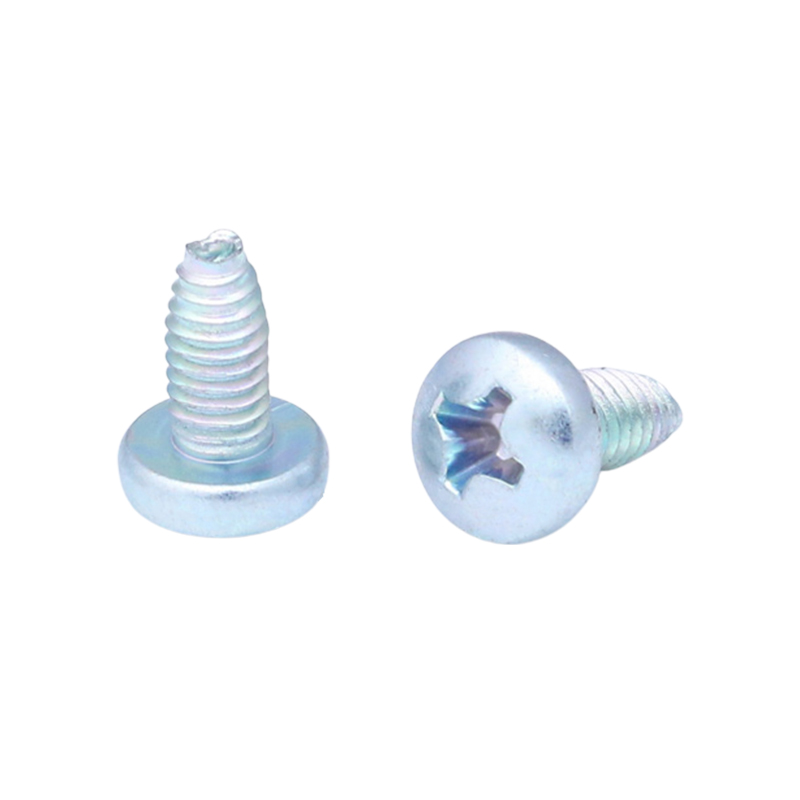
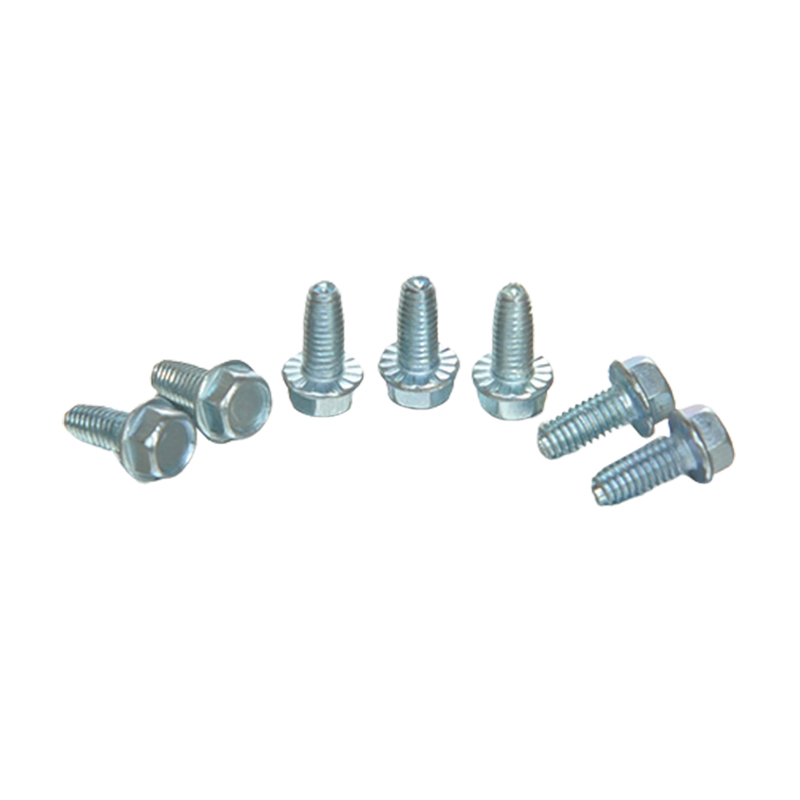
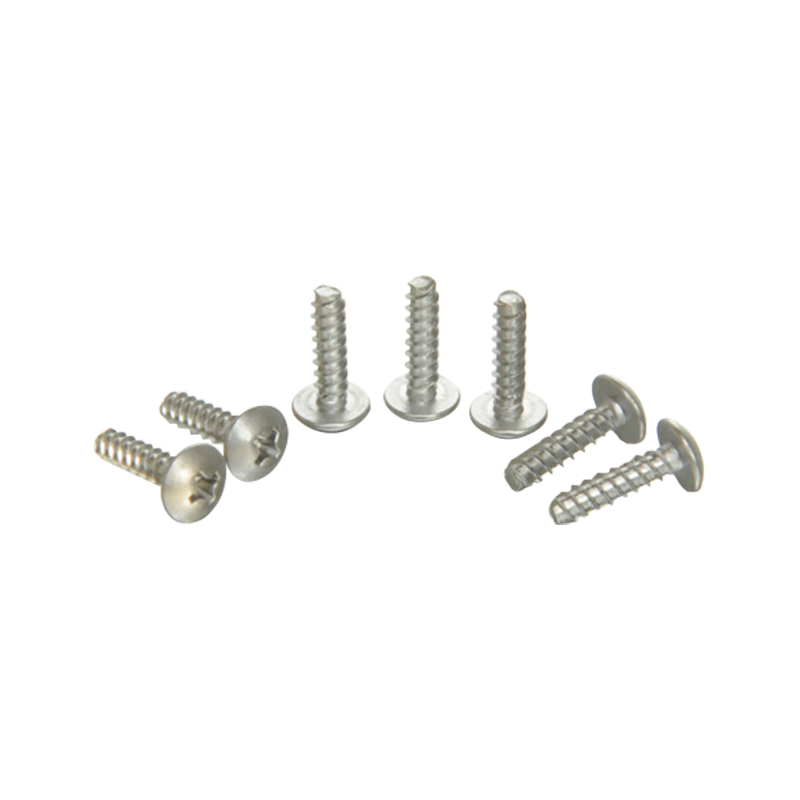 410 Stainless Steel Screw for Through-Hardened Thread CuttingThis martensitic stainless screw can be hardened to HRC 30-45, keeping cutting edges sharp and resisting bit stripping, unlike annealed 316 which stays soft in thread-forming applications.View Product →
316 in the annealed condition reaches roughly HRB 80 to 90, which corresponds to about HRC 15 to 18. It is tough and ductile, and cold working raises its strength noticeably because the austenite partially transforms to martensite under deformation. But 316 cannot be through-hardened. If a stainless fastener must form its own thread in sheet metal or plastic without losing its cutting geometry, 410 is the engineering standard.
316 is also more prone to thread galling during tightening because austenitic stainless steel can cold-weld under pressure; a thread lubricant and a moderate tightening speed usually prevent the problem.
Magnetic Behavior
Magnetic response is a practical detail that buyers often overlook until a product fails final inspection.
410 is ferromagnetic. It is strongly attracted to magnets, which is convenient for magnetic tool pickup on assembly lines and may be necessary in sensing or mounting applications that rely on a magnetic mass.
316 is essentially non-magnetic in the annealed condition. Cold working can induce a weak magnetic response, because some austenite transforms to martensite under heavy deformation, but 316 remains far less magnetic than 410 in practical use. If the final product contains a compass, magnetic sensor, MRI equipment, or deflection-sensitive electronics, specify 316.
Cost and Procurement Considerations
The price gap between the two grades is easy to explain and hard to ignore.
316 costs more than 410 for two reasons: nickel and molybdenum. Nickel is 10 to 14 percent of 316 by weight, and nickel pricing is among the most volatile inputs in the stainless steel industry. The 2 to 3 percent molybdenum addition contributes another surcharge. Both costs flow through the raw-material chain and end up in the finished fastener price.
As a rough rule, raw-material cost for 316 is 1.5 to 2 times the cost of 410, and the multiple has been higher in periods of strong nickel prices. For fastener procurement, however, unit price is only half of the equation.
Total cost of ownership changes the picture. A 410 screw in a dry indoor application can last indefinitely. The same screw on a coastal facade may need replacement within one to two years, and each failed fastener costs labor, downtime, and warranty administration. A 316 fastener in wet service avoids most of that, and the longer service life often offsets the higher purchase price. Buyers should treat 410 as the economical choice only when the service environment genuinely allows it.
Fastener Applications: When to Choose Which
Bringing the properties together, the selection for most fastener projects becomes clear.
Choose 410 when
- The joint is indoors and dry throughout its expected service life.
- The screw must tap its own thread in thin metal, plastic, or wood-based composites.
- Drive-torque resistance and wear resistance matter under repeated assembly.
- Magnetic behavior is acceptable or beneficial.
- Unit cost is the dominant commercial constraint and the environment is confirmed to be mild.
Choose 316 when
- Rain, condensation, salt mist, or chemical wash-down can reach the joint.
- The fastener must be non-magnetic or only weakly magnetic.
- The assembly must remain corrosion-free for years without maintenance.
- The application involves food processing, pharmaceutical production, or marine equipment.
For assemblies where a single screw must drill, tap, and fasten in one pass, a self-drilling stainless steel screw shortens installation time and reduces the number of tools required.
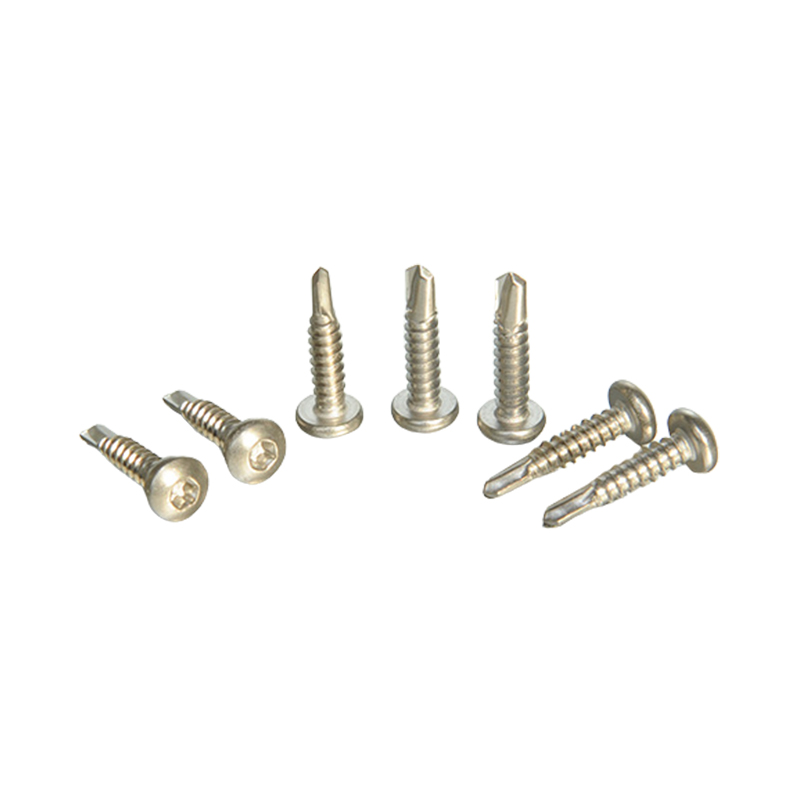 Stainless Steel Hex Socket Pan Head Self-Drilling ScrewA single-pass drilling and tapping fastener that reduces installation time and tool changes, suited for assemblies where stainless steel is specified and efficiency matters.View Product →
| Consideration | 410 | 316 |
|---|---|---|
| Corrosion resistance | Moderate; dry indoor only | Excellent; marine and chemical service |
| Hardness | HRC 30–45 after heat treatment | HRB 80–90 in annealed condition |
| Magnetism | Yes | Barely magnetic |
| Relative unit cost | Low | 1.5–2.5 times higher |
| Typical environment | Indoor, dry, protected | Outdoor, humid, salty, chemical |
A Practical Selection Checklist
Work through these five steps whenever a drawing specifies stainless steel without naming a grade.
- Define the worst-case environment. If chloride, salt mist, condensation, or wash-down chemicals can touch the joint, choose 316. If the service is dry and protected, 410 remains viable.
- Check the mechanical load. If the fastener forms threads, cuts its own pilot hole, or is torqued repeatedly, hardened 410 resists wear better. If the fastener only clamps parts together, 316 has enough strength for most structural joints.
- Check magnetic restrictions. Products with compasses, magnetic sensors, electron-beam equipment, or sensitive electronics require 316.
- Calculate total cost, not unit cost. Add replacement labor, expected service life, and failure risk to the purchase price of each grade. In wet or chloride environments, 410 loses this calculation almost every time.
- Confirm surface treatment. Passivation removes free-iron contamination from tooling and drawing lubricants on both grades. For additional corrosion margin on 410, zinc plating or Dacromet coatings are practical options. 316 usually needs no additional coating in normal service.
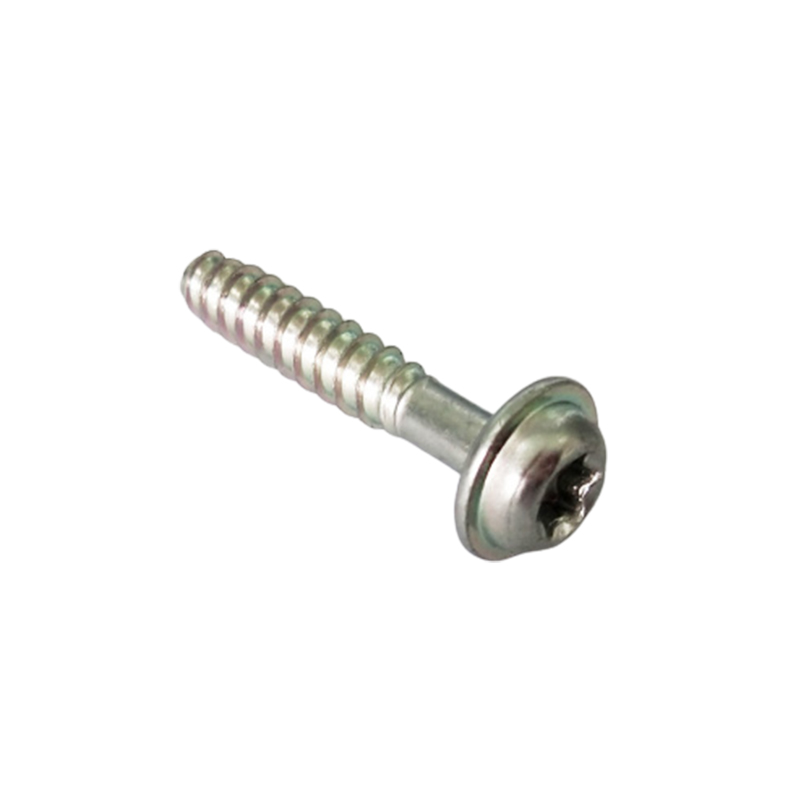
In high-volume assembly, using a combination screw with a pre-assembled washer can reduce part count and simplify inventory control.
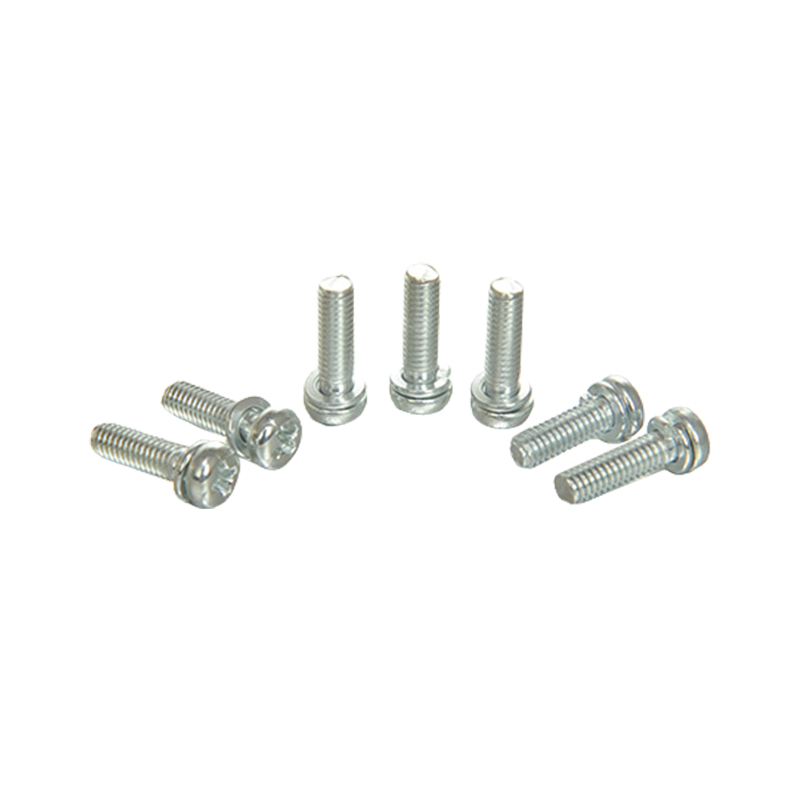
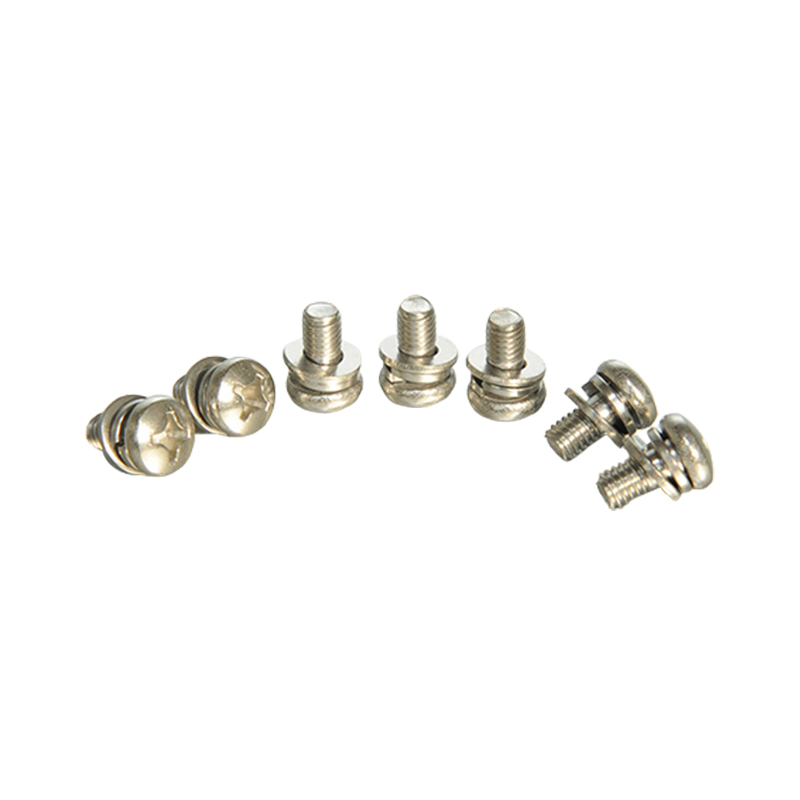 Stainless Steel Combination Screw with Pre-Assembled WasherThis screw with a captive washer lowers part count and simplifies inventory in high-volume assembly, while the 410 vs 316 comparison helps match the alloy to service needs.View Product →
The decision between 410 and 316 is not about which alloy is universally better. It is a matching exercise: match 316 to corrosive service and non-magnetic requirements, and match 410 to hardened, dry, and cost-sensitive applications.
For custom sizes, head styles, or special coating requirements, an experienced fastener manufacturer can help confirm the grade before the production order is placed.