 English
 Español
 日本語

Three suppliers, one specification, and three different questions. When a purchasing team sends out an RFQ for stainless steel 304 screws, the replies often come back asking whether the order should be 304 or 304L, what property class is required, and whether a material certificate is acceptable. The reason is that grades of stainless steel 304 form a family of related alloys, not one fixed composition. The grade you select changes corrosion performance, tensile strength, weld behavior, high-temperature capability, and unit price. Sorting this out before you order is far cheaper than replacing fasteners after installation.
What the Grades of Stainless Steel 304 Mean
Stainless steel 304 is the most widely used austenitic stainless steel. Its 18% chromium and 8% nickel base, the reason it is often called 18/8 steel, gives it a stable austenitic structure and a self-repairing chromium oxide film. Chromium provides corrosion resistance, while nickel preserves toughness and a low magnetic response in the annealed condition.
Within this base composition, alloy producers adjust carbon and nitrogen to create the family: 304, 304L, 304H, and the less common 304N. Carbon is the main variable that separates them.
| Grade | UNS | Carbon | Chromium | Nickel | Distinctive feature |
|---|---|---|---|---|---|
| 304 | S30400 | ≤ 0.08% | 18.0–20.0% | 8.0–10.5% | General-purpose 18/8 grade |
| 304L | S30403 | ≤ 0.03% | 18.0–20.0% | 8.0–12.0% | Low carbon, weld-friendly |
| 304H | S30409 | 0.04–0.10% | 18.0–20.0% | 8.0–10.5% | High-temperature strength |
| 304N | S30451 | ≤ 0.08% | 18.0–20.0% | 8.0–10.5% | Nitrogen raises yield strength |
304L limits carbon to 0.03% maximum, which keeps chromium in solution during welding and prevents sensitization. 304H is specified with a minimum carbon range so that the steel develops the creep resistance needed above 425°C. 304N adds nitrogen to lift yield strength without sacrificing ductility. In practice, fastener buyers choose between 304 and 304L most of the time; 304H appears in bolting for hot services, and 304N in structural fasteners where section size cannot grow.
The chart compares carbon limits across the family. The practical effect of this difference shows up in welded assemblies and in service temperatures, which we examine next.
304 vs 304L vs 304H: Strength and Service Conditions
The mechanical values below are for annealed bar and plate. Bolts and screws are stronger than these numbers because cold heading and thread rolling work-harden the austenitic structure.
| Grade | Tensile strength (min) | Yield strength (min) | Elongation (min) | Common fastener rating |
|---|---|---|---|---|
| 304 | 515 MPa | 205 MPa | 40% | A2-70 / A2-80 |
| 304L | 485 MPa | 170 MPa | 40% | A2-70 |
| 304H | 515 MPa | 205 MPa | 40% | A193 B8 bolting |
ISO 3506-1 groups 304-family alloys under the designation A2 for fasteners. An A2-70 screw must reach 700 MPa minimum tensile strength; A2-80 must reach 800 MPa. When you see “A2-70” stamped on a screw head, you are looking at a 304-family fastener that has been cold worked to a defined strength level, not a heat-treated one.
Temperature changes the ranking. For continuous service near 425°C and above, 304 and 304L lose creep strength quickly, which is why 304H with its controlled carbon range is preferred for heat exchangers, boiler internals, and flanged joints. At the opposite end, austenitic grades keep impact toughness at cryogenic temperatures, so 304 remains a standard choice for low-temperature equipment.
Corrosion Resistance and the Limits of 304
Corrosion resistance is where the 304 family performs best and is also most often misjudged. In normal atmospheres, fresh water, food processing, and mild chemical exposure, 304 fasteners typically last for decades. Curtain wall anchors, sanitary fittings, and interior machinery are all safe territory for the grade.
The limits appear when chlorides are present. Coastal salt spray, road de-icing salts, and chlorinated pool air attack the passive film of 304, producing pitting and crevice corrosion under bolt heads or in thread roots where moisture collects. For marine fasteners, specifiers usually move to A4 (316-family) stainless steel, or they choose a 304 fastener with a protective coating and strict passivation.
Welding introduces a second risk. When 304 is heated in the 425–815°C range, as happens in the heat-affected zone of a weld, chromium carbide can precipitate at grain boundaries and deplete chromium locally. That condition, called sensitization, leaves the steel vulnerable to intergranular corrosion. 304L with 0.03% maximum carbon was created specifically to prevent it. If your assembly is welded after the fastener is installed, or if the fastener itself is welded into a structure, 304L is the safer call.
One procurement trap deserves attention: using a neutral salt spray test as the only acceptance criterion and rejecting 304 screws when red rust appears. 304 resists corrosion with a thin passive oxide film, not a rust layer, and the salt spray chamber is an aggressive chloride environment that even a well-made 304 fastener may fail quickly. Passivation removes embedded free iron and lets the film form properly. We explain how stainless steel screws resist corrosion over time in a separate article.
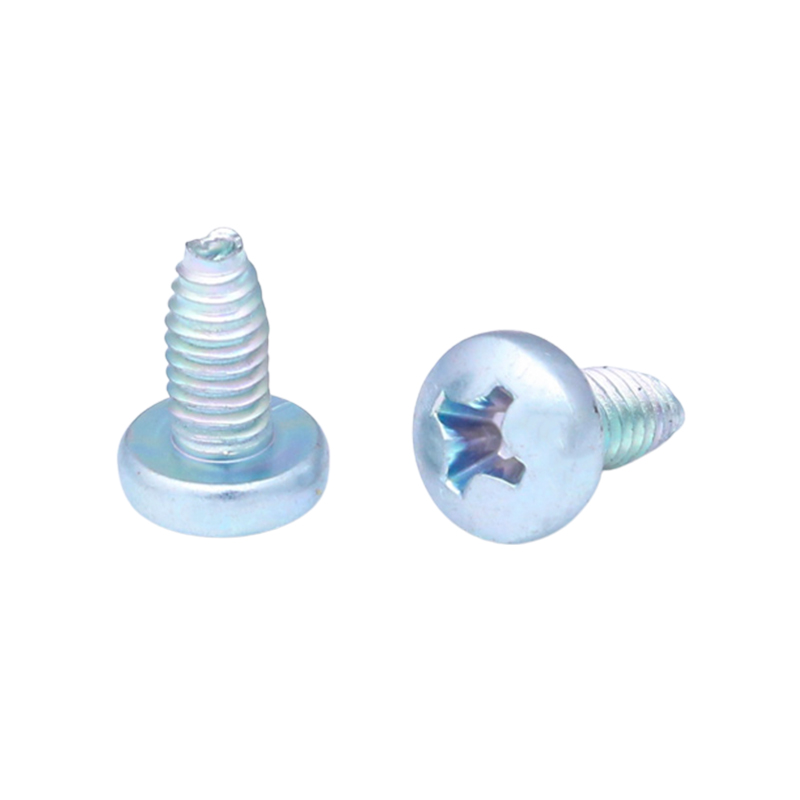
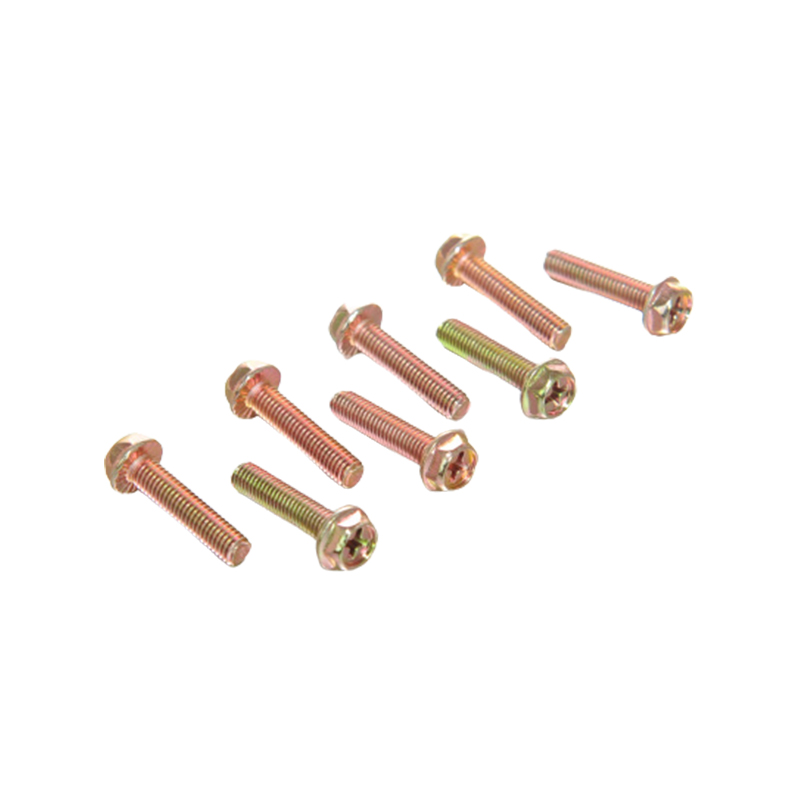
For assemblies that need a sealing washer under the head, a 304 cross pan-head screw with pad reduces the number of independent parts and keeps the washer material matched to the screw.
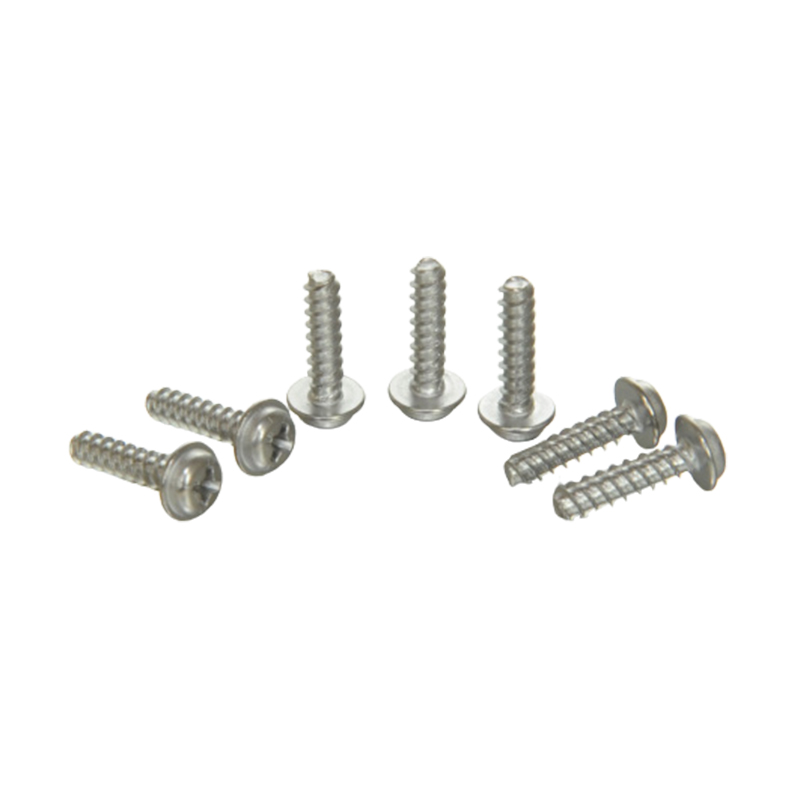 Cross Pan Head Screw with Pad, 410 Stainless SteelThis screw uses 410 martensitic stainless and requires zinc plating for corrosion resistance. Verify its tensile strength and hardness against the A2 or F593 grade requirements in your design.View Product →
How to Specify 304 Fasteners Correctly
Start with the standard. ISO 3506-1 covers metric stainless fasteners and defines the A2 group for the 304 family; ASTM F593 covers 304 and 304L bolts and screws in imperial sizes. State the property class explicitly on the drawing or purchase order: A2-70 is a sensible default, while A2-80 provides a higher clamping load in smaller diameters.
Work through this decision sequence when comparing quotes:
- Is the assembly welded after the fastener is installed?
- Yes — choose 304L to avoid sensitization.
- No — standard 304 is acceptable.
- Does the part see continuous service above 425°C?
- Yes — evaluate 304H for creep strength.
- No — 304 or 304L remains suitable.
- Is the environment chloride-rich, such as coastal air, road salt, or pool chemicals?
- No — 304 is normally adequate.
- Yes — consider 316, or specify passivated 304 with an inspection plan.
- Is a guaranteed strength level required? Verify the property class and ask for a mill test certificate confirming carbon, chromium, nickel, and nitrogen values.
For critical batches, do not rely on the box label alone. Compare the certificate values against the UNS limits in the first table above. Also confirm geometry, including thread pitch, length, and head style, because a correct alloy with the wrong pitch will still fail in assembly.
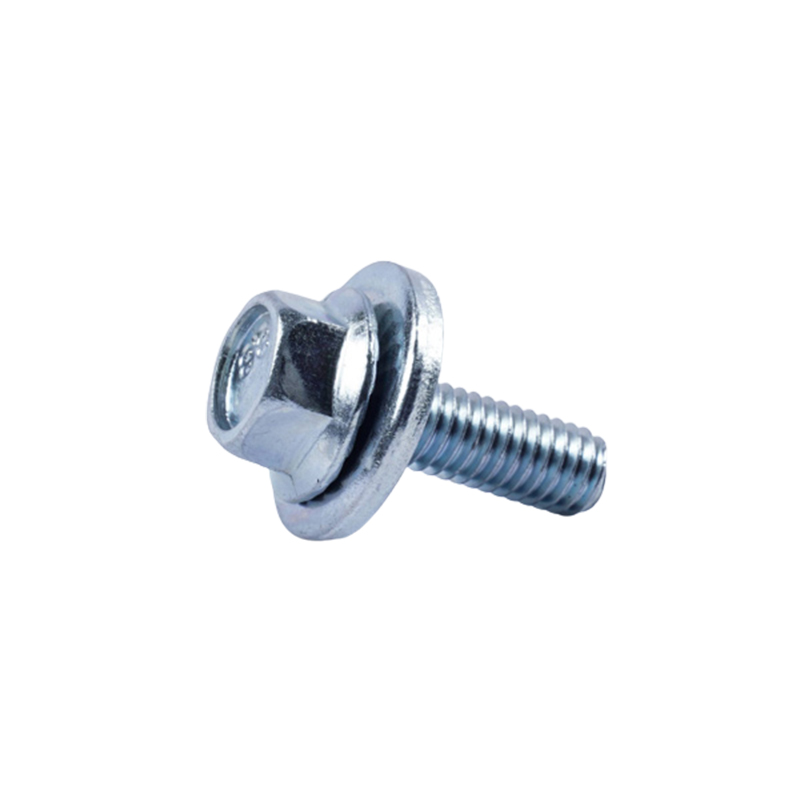
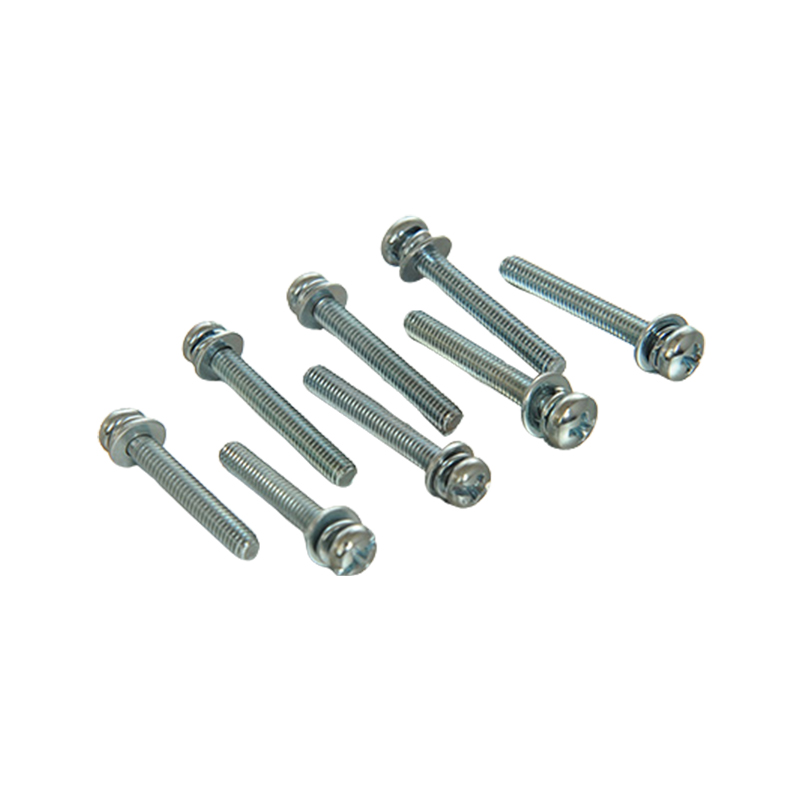
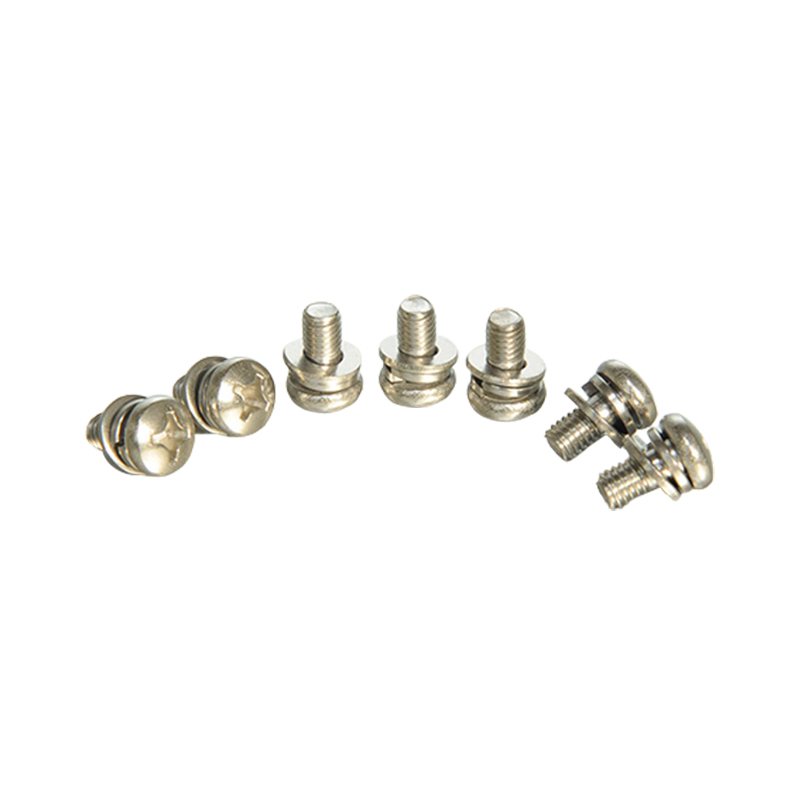 Stainless Steel Combination Screw from Ningbo RishengCombination screws with captive washer come from the same coating lot, ensuring predictable galvanic behavior and simpler inspection for critical assemblies in furniture, machinery, or automotive applications.View Product →
Combination screws with a captive washer are a good example of grade control: the screw and its washer come from the same coating lot, so galvanic behavior across the joint is predictable and inspection is simpler.
Fastener Manufacturing and Quality Checks for 304
Cold heading 304 is less forgiving than forming carbon steel. The austenitic structure work-hardens quickly, so forming loads are higher and lubricant selection matters more. That same work hardening is an advantage in thread rolling: rolling compresses the steel at the thread root and raises yield strength without any heat treatment. This is how an annealed 515 MPa base material becomes a 700 MPa A2-70 screw.
A side effect surprises many buyers: a 304 screw that is slightly magnetic is normal. Cold deformation converts part of the austenite to martensite, and the effect is stronger after thread rolling and heading. Magnetism in a 304 fastener does not mean the grade is wrong.
Self-drilling screws need a harder cutting edge. For thin sheet steel, a work-hardened 304 drilling screw can perform well; for heavier profiles, some manufacturers use 410 martensitic stainless for the tip. Matching the screw material to the drilling task prevents broken tips and stripped heads in the field.
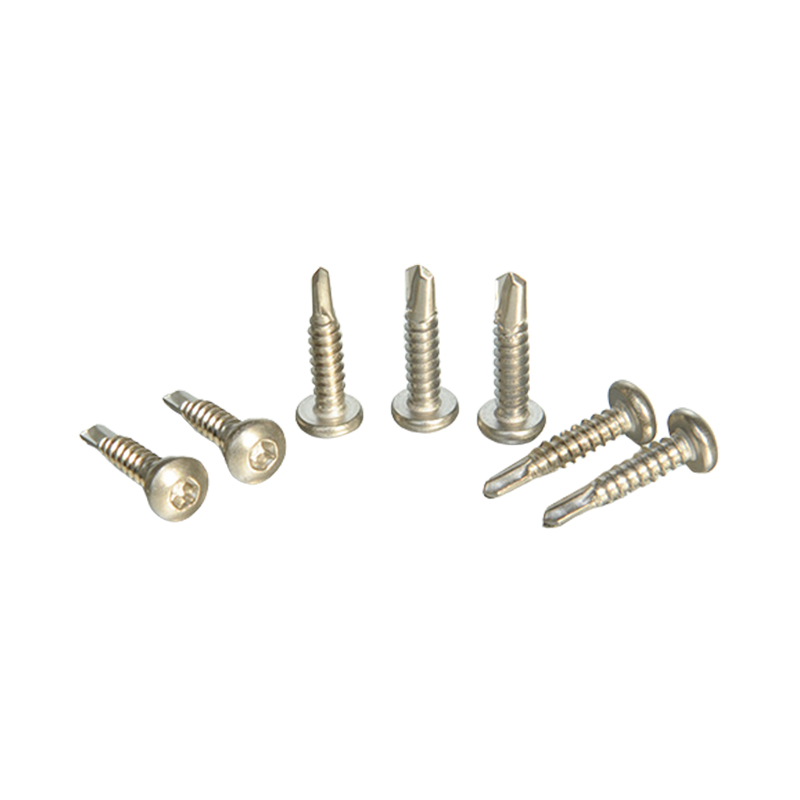 Hexagon Socket Pan Head Self-Drilling ScrewThis drilling screw eliminates pre-drilling for direct installation in thin sheet steel. With manufacturer testing and over 40 years of fastener experience, it suits demanding indoor and outdoor environments.View Product →
Quality checks should cover more than dimensions. In-house testing at Ningbo Risheng Fastener Co., Ltd. includes dimensional projection, torque, tensile, salt spray, hardness, and metallographic examination on representative batches. With more than 40 years of fastener manufacturing experience and exports to Europe, America, and Japan, the engineering team can help fix the 304 sub-grade, coating, and property class before production starts.
Choose the Right 304 Sub-Grade Before You Order
Grades of stainless steel 304 are engineering choices, not marketing labels. Use 304 as the default, move to 304L when welding matters, and keep 304H for high-temperature bolting. Define the property class, request the certificates, and confirm passivation. A few minutes spent on the specification prevents pitting, cracking, and the cost of pulling an installed batch out of service. If you need help matching the grade to your application, review our stainless steel screw range or send the drawing and service conditions to our engineering team.