 English
 Español
 日本語

Sizing a screw starts with one question: what must the screw hold, and how deep can it safely go? For a common wood-to-wood joint, use this starting formula: screw length = thickness of the top piece + one-half to two-thirds of the thickness of the receiving piece. A 3/4-inch board over a 2x4, for example, points to roughly 1-1/2 to 1-3/4 inches, depending on load and wood species. The head type matters just as much: a flat-head screw is measured from the top of the head to the tip, while a pan, hex, or round-head screw is measured from under the head to the tip. That single difference explains many wrong-size purchases.
The right length is not the longest screw that fits. It is the shortest length that gives enough thread engagement without breaking through, bottoming out in a blind hole, or leaving a sharp point exposed.
Start With the Joint, Not the Screw
Measure the parts being joined before looking at a catalog. In a two-piece joint, the first piece is the top or fixture; the second is the receiving material that supplies holding strength. The screw must pass through the first and engage enough of the second. For wood, that engagement is usually one-half to two-thirds of the receiving thickness. For metal, it is usually two to three full threads. For an anchor, it is the anchor's specified embedment plus the fixture thickness.
| Joint | Starting length | What to check |
|---|---|---|
| Wood board over a 2x4 | 1-1/2 to 1-3/4 inch for a 3/4-inch top | At least one-half, preferably two-thirds, of the receiving thickness; avoid poke-through. |
| 1/2-inch drywall on wood stud | 1-1/4 inch | Screw must reach the stud without breaking the paper face. |
| 5/4 deck board over joist | 2-1/2 to 2-3/4 inch | Joist depth, board thickness, and whether the tip can remain hidden. |
| Self-drilling, sheet metal to sheet metal | Total metal thickness + drill point + 3 threads | Point length and thread length are separate from overall length. |
How Screw Length Is Measured
Length is not always the visible shank. A countersunk or flat-head screw is measured overall, including the head, because the head sits flush with the surface. A pan-head, round-head, hex-head, or flange-head screw is measured from the underside of the head to the tip. A 1-inch flat-head screw therefore has 1 inch from the top face of the head to the point; a 1-inch pan-head screw has 1 inch of shank below the head.
Washers change the effective grip. A bonded washer or a separate flat washer can add 0.030 to 0.080 inch or more, depending on size. In a shallow blind hole, that can be the difference between clamping and bottoming out. If a drawing gives length under head and you are ordering a flat-head screw, add the head height before comparing the two.
Wood-to-Wood: Use the Two-Thirds Rule With a Safety Check
For softwoods, engineered wood, and load-bearing joints, aim for about two-thirds of the receiving piece. For dense hardwoods, one-half may be enough, but pre-drill to reduce splitting. A simple field formula is:
Length = top-piece thickness + (0.50 to 0.67 × receiving-piece thickness)
For flat-head screws, that result already includes the head. For a non-flat head, the same result applies to the length under the head. If the screw must sit flush, confirm the countersink depth before ordering.
The chart is a planning target, not a building code. Grain direction, pilot-hole size, edge distance, and vibration can require a different length or a different fastener altogether. A screw that is long enough but placed too close to an edge can split the board before it carries load.
Metal-to-Metal and Metal-to-Wood
Metal joints do not use the wood two-thirds rule. For a machine screw in a tapped hole, calculate grip length first: the total thickness of the parts being clamped. Then add two to three full threads of engagement. For an M5 x 0.8 screw, three threads equal 2.4 mm. If the grip is 10 mm, a 12 to 13 mm length is often a better starting point than a 16 mm screw that bottoms out. Confirm whether the standard measures length under the head or overall.
For self-tapping screws in sheet metal, the screw must pass through the top sheet and engage the lower sheet with at least three full threads. Too short a screw strips the hole; too long a screw can protrude, interfere with a mating part, or create a sharp edge. Check thread pitch as well as length, because a coarse thread in thin sheet and a fine thread in a tapped hole are not interchangeable.
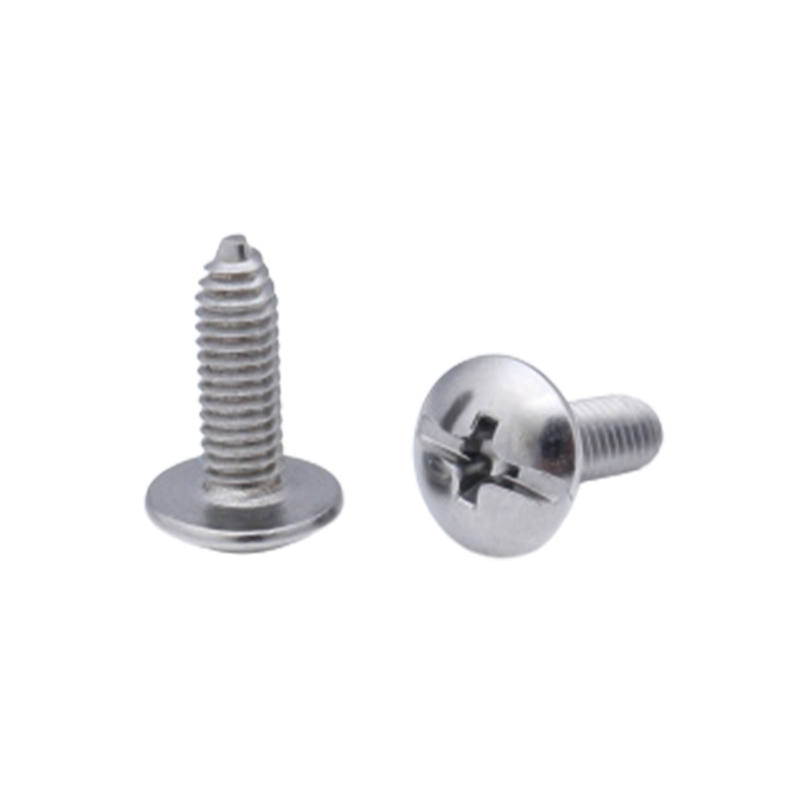
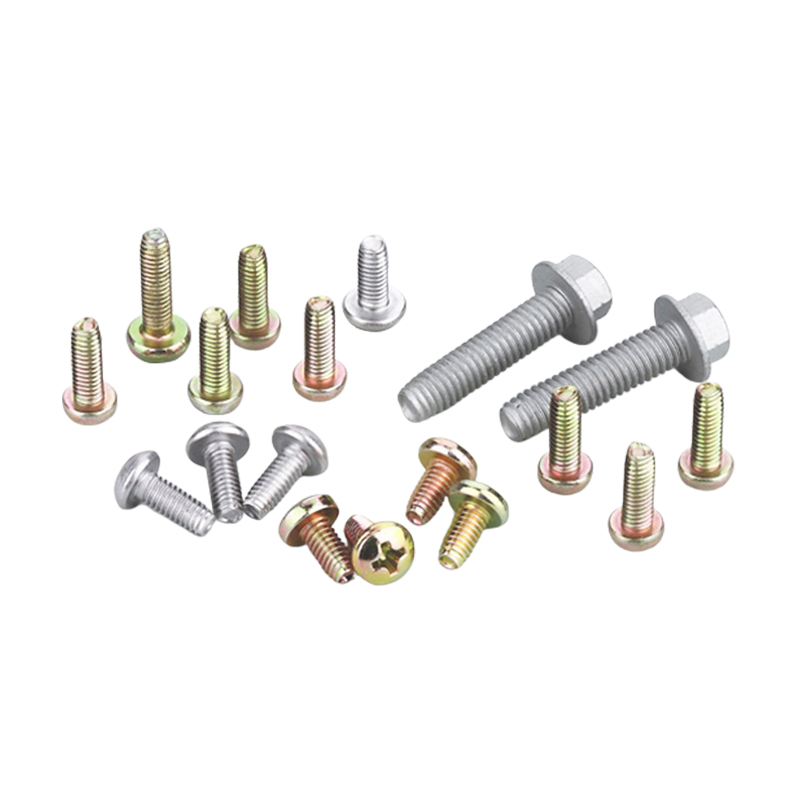 Metal Self-Tapping Lock Screws for Sheet MetalCoarse-thread locking screws form threads in metal and suit sheet-metal joints where thread engagement and vibration resistance matter.View Product →
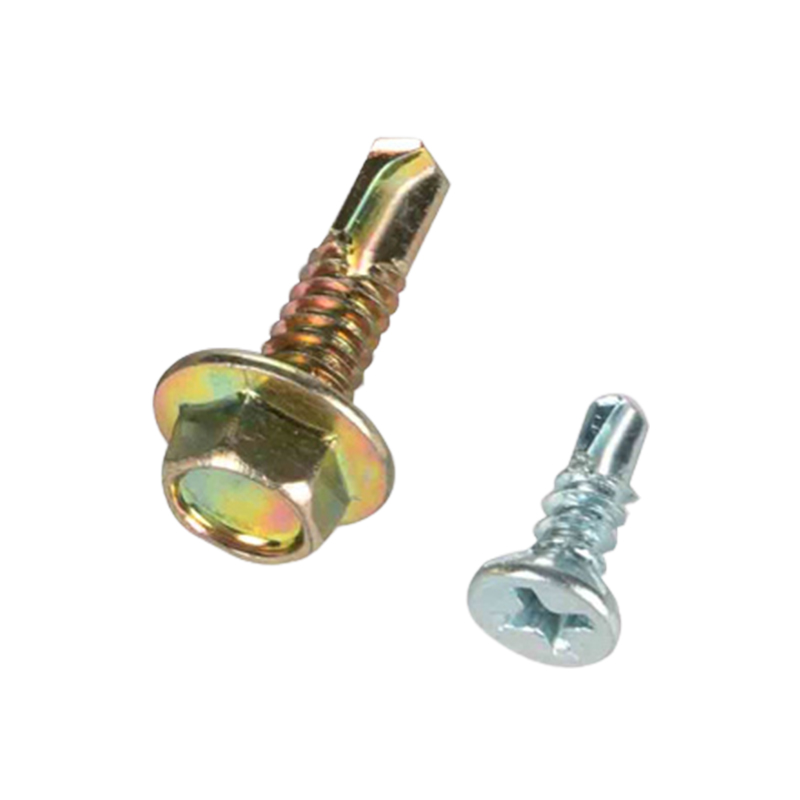
Self-drilling screws add another allowance: the drill point. The point does not clamp the joint, so the working length must cover the total material thickness, the point, and the required threads beyond the lower sheet. If two sheets total 0.125 inch and the point is 0.125 inch, a 0.375-inch screw leaves very little thread engagement; verify the thread length in the catalog rather than relying on the headline length.
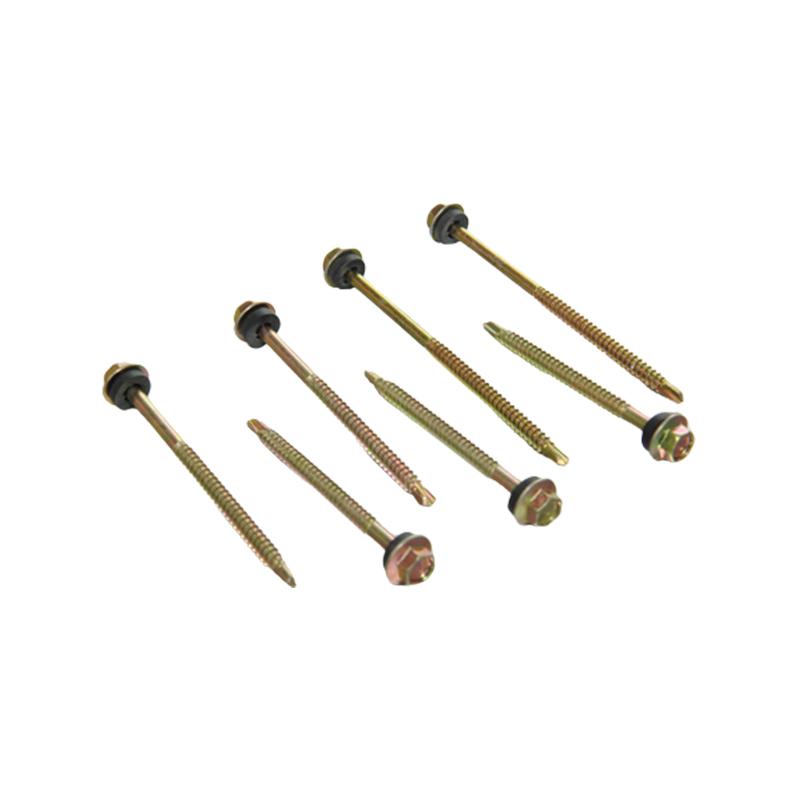 Hexagonal Flange Self-Drilling Screws with Sealing PadPad and gasket help distribute load and improve sealing, making these screws worth checking for metal-to-wood or uneven fastening joints.View Product →
For metal-to-wood, use a self-drilling screw that clears the metal and embeds one-half to two-thirds into the wood. A screw that only reaches the wood surface will not develop holding strength, while one that is too long can exit the far side of a shallow member.
Drywall, Concrete, and Anchors: Add the Fixture Thickness
Drywall screws are a length family, not a universal rule. For 1/2-inch drywall on wood studs, 1-1/4 inch is common; for 5/8-inch drywall, 1-5/8 inch is common. Fine-thread screws are used for metal studs, and the screw must reach the stud without breaking the paper. If the drywall is doubled or the stud is furred out, measure the actual stack rather than assuming.
Concrete screws and anchors require the fixture thickness plus the anchor's specified embedment. A 3-inch concrete screw is not automatically correct for a 1/2-inch bracket; the anchor manufacturer's minimum embedment and hole depth control the choice. Do not substitute a longer screw without checking that the anchor can still set, and do not use a shorter screw that leaves the anchor partially expanded.
Stainless Steel and Exterior Work
Stainless screws are common where moisture, washdown, or outdoor exposure is present. Grade 410 is a hardened stainless often used for self-tapping; it offers better corrosion resistance than zinc-plated carbon steel but is not the same as 304 or 316 in aggressive chloride. Length follows the same joint rule, but the head and thread form must match the application. If you are matching a stainless screw to a tapped or pre-drilled hole, check thread pitch and sizing rather than assuming inch and metric lengths interchange; this guide to stainless steel screw sizing and thread pitch is a useful cross-check.
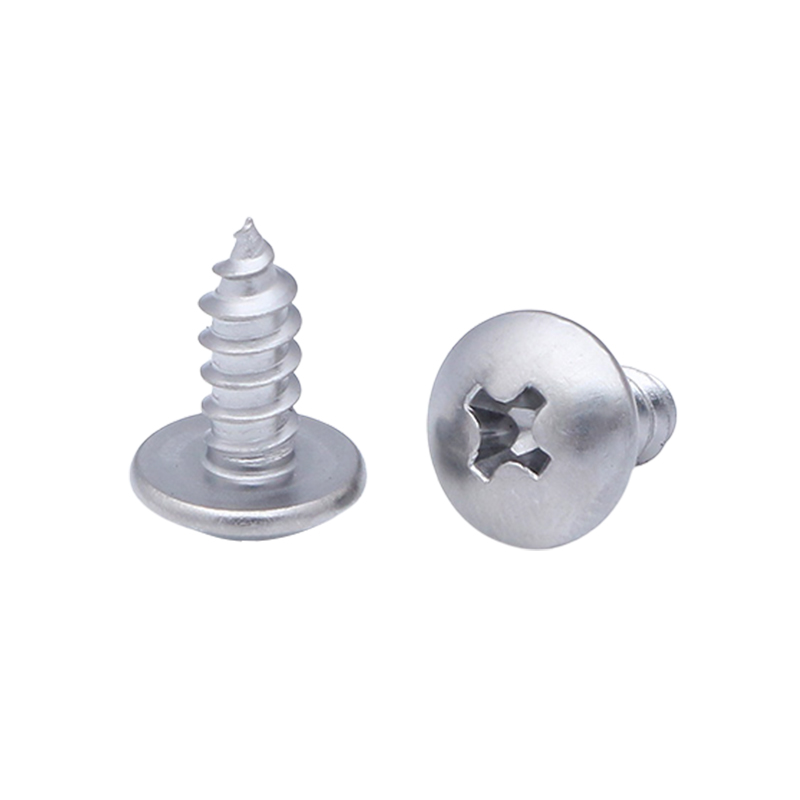
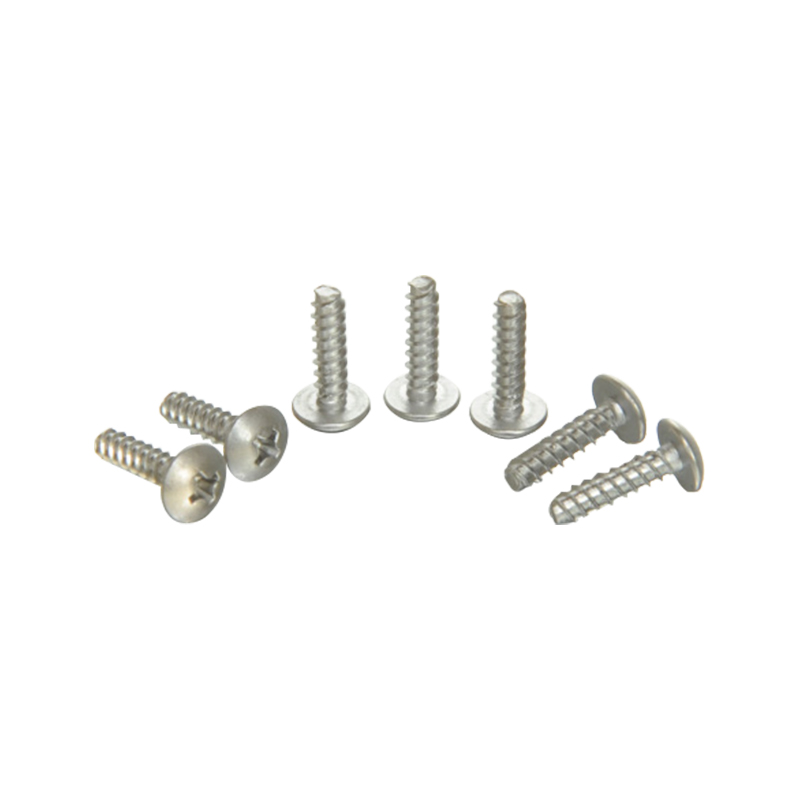 410 Stainless Steel Screws, Big Flat Head410 stainless steel screws with big flat head suit general fastening; check thread form and sizing when matching moisture or outdoor joints.View Product →
Exterior decking and cladding add a visual check: the screw must not create a sharp point below the substrate or a puckered surface above it. A slightly shorter screw with a washer may be safer than a longer screw that bottoms out.
Common Length Mistakes and Purchasing Checks
- Measuring a flat-head screw from under the head, then ordering a pan-head screw to the same nominal length.
- Treating overall length as grip length in a metal joint, which leaves too few threads engaged.
- Forgetting the drill point on a self-drilling screw, so the screw reaches the lower sheet but does not thread through it.
- Ignoring washer thickness, coating thickness, or countersink depth in a blind hole.
- Using a longer screw to fix a short-engagement problem when the real issue is diameter, thread pitch, or pilot-hole size.
- Mixing inch and metric designations without converting diameter, pitch, and length.
For production purchasing, confirm the standard, head type, drive, thread pitch, point type, length definition, tolerance, coating, and lot traceability. A dimensional check with a caliper is useful, but the drawing and the standard define what the length should be.
A Simple Selection Sequence
- Measure the top piece or fixture thickness.
- Measure the receiving material and choose the embedment target: one-half to two-thirds for wood, two to three threads for metal, specified embedment for an anchor.
- Choose the head type and confirm whether length is overall or under head.
- Add the drill point, washer, or countersink allowance where applicable.
- Check clearance on the far side and verify the product standard.
- Test the chosen length in scrap material before installing the full run.
If the joint is custom or the drawing is ambiguous, send a sample or drawing to a fastener manufacturer that can confirm the length definition before production. The cost of one wrong length is usually small; the cost of a full lot that bottoms out, protrudes, or strips is not.