 English
 Español
 日本語
日本語

Securing critical infrastructure, high-value public assets, and sensitive electronic enclosures against unauthorized disassembly or opportunistic vandalism requires mechanical fasteners engineered to resist standard hand tools. An industrial-grade anti-theft screw solves this physical security vulnerability by replacing conventional linear slots, cross-recesses, or uniform hexagonal drive sockets with specialized, high-security drive geometries. By utilizing unique physical shapes, central obstruction pins, or one-way slipping flanks, these fasteners isolate the torque-transmission surfaces from standard screwdrivers and pliers, ensuring that only dedicated, matching driver bits can exert the mechanical leverage needed to loosen the joint.
Kinematic Drive Geometries and Mechanical Tamper Resistance
The fundamental engineering objective of an anti-theft screw is the manipulation of the drive recess geometry to deny purchase to common tools. Standard flathead, Phillips, or basic hex tools rely on parallel vertical walls or perpendicular slots that allow a wedge-shaped tool to apply rotational forces easily. Security fasteners disrupt this accessibility by altering the angles, count, or center profiles of these contact faces.
These geometries are divided broadly into two functional categories: reusable security fasteners that require specialized matching driver bits for both installation and extraction, and permanent one-way fasteners engineered to break or slip if removal is attempted. Choosing between these designs depends entirely on whether the enclosed component will require periodic internal maintenance, calibration, or eventual recycling over its operational lifespan.
Pin-In Security Recess Architecture
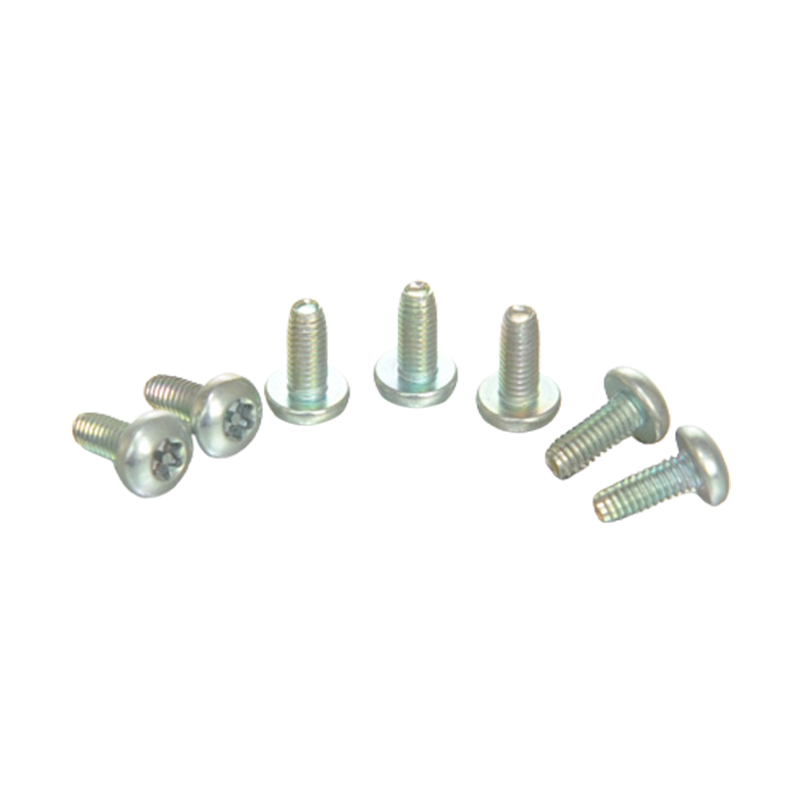
One of the most widely implemented reusable security methods involves placing a solid cylindrical obstruction pin directly in the geometric center of a standard drive recess, such as a six-lobe star or hexagonal socket. This central pin physically blocks a standard allen wrench or star bit from dropping into the recess holes. To turn a pin-in security screw, the technician must use a matching driver bit manufactured with a precisely centered coaxial drilling path. This hollow core slips over the obstruction pin, allowing the outer teeth of the bit to engage the torque faces.
Asymmetric and Curvilinear Drive Paths
Higher security tiers move away from modified standard profiles entirely, opting instead for proprietary asymmetric or curving shapes. Examples include smooth, three-lobed clover designs, notched perimeter slots, or undulating concentric tracks machined into the screw head face. Because these patterns lack flat parallel walls, standard straight-edged tools slip off completely when torque is applied. The specialized installation tool must match the smooth curves exactly to distribute the rotational force evenly across the head, minimizing cam-out while maximizing security.
Metallurgical Composition and Case-Hardening Profiles
An advanced geometric drive design offers little security if the metal substrate is soft enough to be breached by drilling or gripped by locking pliers. If an attacker can force a hardened steel drill bit into the center of the screw head, or cut a crude slot into it with a handheld rotary saw, the geometric security features are effectively bypassed.
To prevent mechanical cutting, drilling, and shearing attacks, anti-theft screws are manufactured from high-tensile alloy steels, such as Grade 10.9 or 12.9 carbon steel, or high-grade austenitic and martensitic stainless steel alloys. Following cold-heading and thread-rolling processing, the fasteners undergo a precise atmosphere-controlled induction case-hardening treatment. This metallurgical process alters the crystalline structures of the outer metal layer, creating a dual-zone profile:
- Super-Hard Surface Layer: Achieves a surface hardness rating typically ranging from 55 to 60 HRC (Rockwell C). This file-hard skin dulls standard high-speed steel (HSS) drill bits instantly and resists teeth biting from heavy locking pliers.
- Ductile Core Matrix: Maintains a lower internal core hardness of approximately 32 to 38 HRC. This softer interior provides essential elastic toughness, ensuring the screw can flex slightly under heavy shear stresses or seismic vibrations without shattering cleanly like brittle, fully hardened metals.
Performance Comparison and Drive Mechanics Matrix
Specifying the correct tamper-resistant fastener configuration requires balancing required torque capacity, operational environment, and the anticipated threat level of potential tampering. A drive mechanism that works perfectly for interior electronics packaging may fail if deployed outdoors in a corrosive marine environment.
The table below evaluates four distinct classes of security drive geometries, detailing their torque limitations, security ratings, and typical application environments:
| Security Drive Type | Mechanical Torque Efficiency | Tamper Resistance Rating | Standard Material Options | Primary Industrial Application |
|---|---|---|---|---|
| Pin-In Six-Lobe (Torx-Plus Security) | High (Excellent drive alignment) | Moderate (Bits commercially accessible) | A2/A4 Stainless Steel, Zinc-Plated Alloy | Automotive sub-assemblies, public transit electronics |
| Two-Hole Spanner (Snake-Eyes Drive) | Low (Prone to pin shearing at high torque) | Low-Moderate (Can be engaged by modified forks) | 304 Stainless, Polished Chrome Steel | Elevator panels, architectural trim, restroom fixtures |
| Proprietary Triangular / 3-Lobe | Medium-High (Good flank engagement) | High (Controlled bit distribution) | Case-Hardened Carbon Steel Alloy | Utility metering systems, prisons, defense enclosures |
| Permanent One-Way Shear Nut/Screw | Determined by hex head break-off threshold | Extreme (Requires destructive extraction) | Hot-Dip Galvanized, Through-Hardened Steel | Outdoor perimeter fencing, solar panel frames, anchor bolts |
One-Way Permanent Mechanics and Sacrificial Engineering
When a component is installed with the absolute requirement that it must never be disassembled by field personnel, engineers utilize sacrificial one-way fastening systems. These designs rely on the intentional mechanical failure of an installation driver element, or one-way sliding paths that prevent a tool from gripping in reverse.
The most common permanent design features a unique screw head profile containing a standard hexagonal drive nut joined to a smooth, conical base by a thin, engineered neck. During assembly, the technician uses a standard wrench on the hexagonal top section. As the screw tightens down completely and bottoms out, the resistance torque rises rapidly. Once the torque reaches a precisely calibrated limit—such as 25 Nm for an M10 thread profile—the narrow metal neck intentionally shears off. This leaves behind a perfectly smooth, dome-shaped or conical bolt head that lacks any slot, hole, or edge for a tool to grab, preventing any future removal.
Sloped-Flank One-Way Profiles
An alternative one-way approach uses a permanent screw head with asymmetric slots. The clockwise driving surfaces feature vertical, square faces that transfer installation torque with zero slippage. However, the counter-clockwise extraction faces are machined with smooth, shallow slopes. If a screwdriver is turned in reverse, the blade rides up the sloped flank and slides out of the slot automatically, making it impossible to grip or back out the screw.
Installation Engineering, Torque Specifications, and Joint Integrity
Implementing anti-theft fasteners requires adhering to strict mechanical assembly guidelines. Simply swapping a standard bolt for a security screw can cause joints to loose clamp load over time if clamping parameters are poorly calibrated.
- Calculate the Target Clamping Preload: Determine the required seating torque using the fastener diameter, thread pitch, and target clamping force. Because security drives like the spanner or pin-in hex have unique recess profiles, they face lower torque limits before the driver bit or recess walls yield compared to standard industrial hex bolts.
- Manage Axis Alignment and Coaxial Drive Force: Always align the power tool or torque wrench perfectly perpendicular to the face of the screw head. Any angular deviation increases the risk of cam-out, which can round off the security drive corners and strip the driver bit, rendering the fastener unusable before it is even seated.
- Integrate Thread-Locking Fluid Compounds: To protect against high-frequency vibrations in public machinery, apply a medium or high-strength anaerobic thread-locking fluid compound to the external threads before installation. This chemical barrier fills micro-gaps within the threads, preventing the screw from loosening under vibrational forces.
- Utilize Deep Counterbore Sub-Flush Seating: Whenever structural wall thicknesses permit, countersink the installation hole to allow the security screw head to seat completely flush or at least 2.0 mm below the surrounding surface. Sinking the screw head eliminates exposed edge profiles, preventing attackers from gripping the head with heavy pipe wrenches or specialized cutting pliers.
Forensic Analysis of Tamper Attempts and Extraction Workflows
When security personnel discover a field enclosure showing signs of a breach attempt, evaluating the physical wear marks left on the anti-theft screw heads can provide valuable information about the attacker's tools and approach.
Deep, symmetrical gouges on the outer edges of a dome head indicate the use of hardened locking pliers or adjustable pipe grips, confirming that the fastener needs to be countersunk deeper to eliminate edge access. If the central security pin inside a star drive is sheared off or bent, it indicates an attacker tried to hammer a standard flat screwdriver into the recess to break the obstruction pin. These observations help engineers adjust their installations, perhaps upgrading to harder 60 HRC case-hardened alloy screws or smoother, pin-free curvilinear profiles that offer higher resistance against blunt impact tools.
When authorized technicians must remove a permanent or seized security screw for official maintenance, they use precise extraction methods to minimize damage to the surrounding assembly. The standard method requires using a specialized portal tool to drill a small pilot hole directly into the center of the hardened bolt shank with a solid carbide bit. Next, an inverse-threaded screw extractor tool is driven into the pilot hole. As the extractor is turned counter-clockwise, its reverse threads bite deeper into the inner wall of the screw shank, seizing the metal and safely backing out the fastner without damaging the internal enclosure threads.