 English
 Español
 日本語
日本語

What Are Combination Screws with Washer?
An assembly line stops when a washer falls off a screw and rolls under the fixture. That small piece of hardware, meant to be fitted by hand at the workstation, becomes the source of rework and delay. Combination screws with washer are engineered to remove that risk by delivering the screw and the washer as one pre-assembled unit. The washer is fitted onto the screw before shipment and stays in position until the threads engage, so the operator never handles the two parts separately.
A combination screw is simply a screw with one or more washers pre-assembled on its body. The most common washer types are flat washers, spring washers, internal and external tooth lock washers, and integrated flange faces. "Double combination" normally means a flat washer plus a spring washer, while "three combination" adds an additional washer element for joints that need both load distribution and strong vibration resistance. In a correctly assembled combination screw, the washer stays on the shank and remains free to rotate, yet it does not detach before the threads meet the mating hole. This retention behavior is part of what makes the product reliable on fast-moving lines. The engineering value of pre-assembly is straightforward: fewer steps on your line, no missing washers, and identical fastener geometry in every box.
How Does a Pre-Assembled Washer Improve Fastening Performance?
The washer is not an afterthought in a combination screw. It changes how the joint behaves under load in four measurable ways:
- Load distribution. A flat washer enlarges the bearing area under the screw head, preventing soft or thin materials from being crushed or scored.
- Anti-loosening. Spring washers and tooth lock washers maintain tension or bite into the mating surface, resisting rotation under vibration and shock.
- Surface protection. The washer separates the screw head from the workpiece, reducing damage to painted, coated, or anodized surfaces.
- Tolerance compensation. A pre-fitted washer bridges minor surface unevenness and hole-size variation that would otherwise concentrate clamping stress.
In practice, a flat washer handles load spread and surface protection, a spring washer provides elastic recovery, and a tooth lock washer resists vibration; the right combination depends on which failure mode your joint is most exposed to. Compared with assembling a loose washer at the point of use, a pre-assembled washer also improves consistency: every fastener in the batch carries the same washer, in the same orientation, with the same retention force. That consistency is exactly what torque-controlled assembly lines depend on.
Common Types of Combination Screws with Washer
Head style and washer configuration should be chosen together, because the two determine how the fastener is driven and how it behaves in the joint. The choice also affects tooling: a hex head suits high-torque driving, a cross recess speeds up automated feeding, and an internal-hex recess accepts both hex and Phillips drivers. These four configurations cover most of what engineers and buyers ask us to produce.
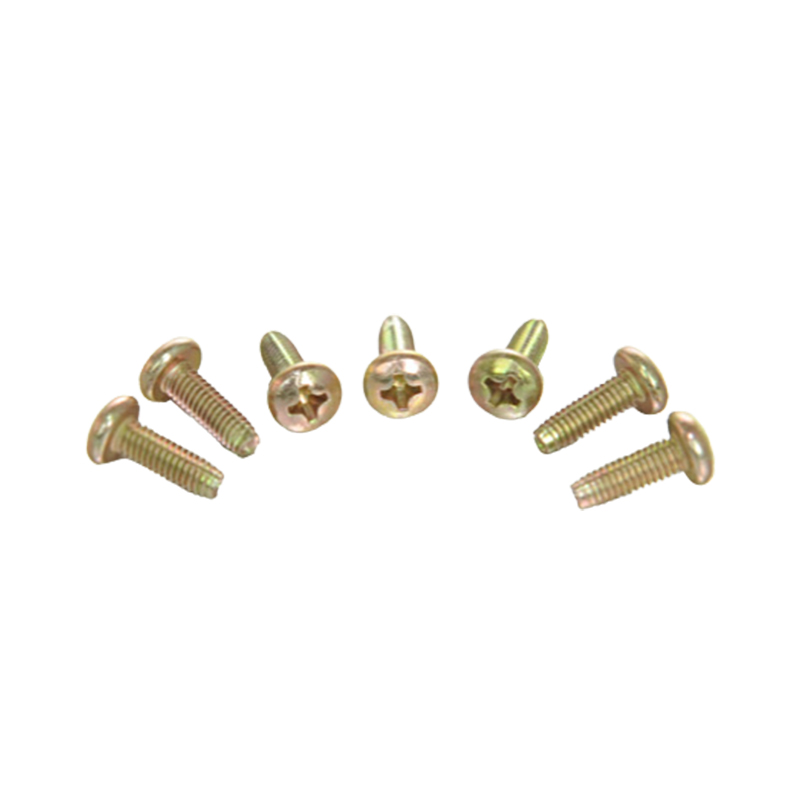
Pan Head Combination Screws with Double Washer
The pan head is the most general-purpose head style, and the double-washer version typically combines a flat washer with a spring washer. The flat washer spreads the clamping load, while the spring washer keeps tension in the joint as it settles. It is a dependable default for industrial equipment, sheet-metal enclosures, and general mechanical assemblies where both load spread and vibration resistance are needed. One standard example is our pan head double combination screws, supplied with a cross recess for standard Phillips drivers.
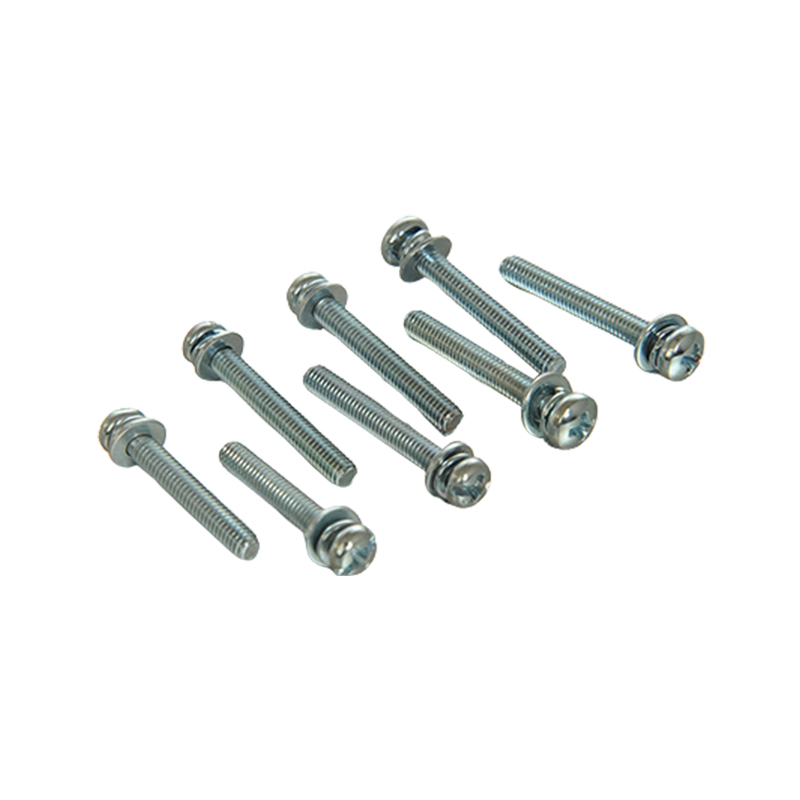 Wholesale Cross Recessed Pan Head Double Combination Screws Suppliers, OEM/ODM MNingbo Risheng Fastener Co., Ltd. is China wholesale Cross Recessed Pan Head Double Combination Screws suppliers and OEM/ODM Cross Recess...View Product →
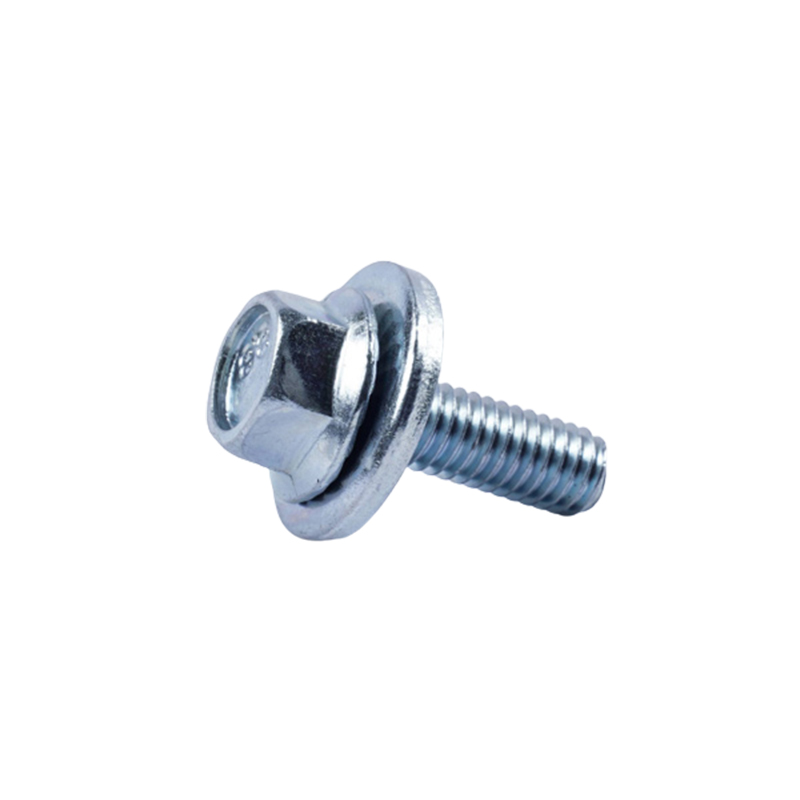
Hex Washer Head Combination Screws
An outer hex head gives the driver a larger, more positive engagement area, which matters when the joint must reach a higher tightening torque. The washer base under the head is often formed as an integral flange that widens the bearing surface without adding a loose part. For heavy assemblies that need consistent clamp force, cross outer hexagonal combination screws combine the hex head with a pre-fitted washer set and a Phillips drive for flexible installation on automated or manual lines.
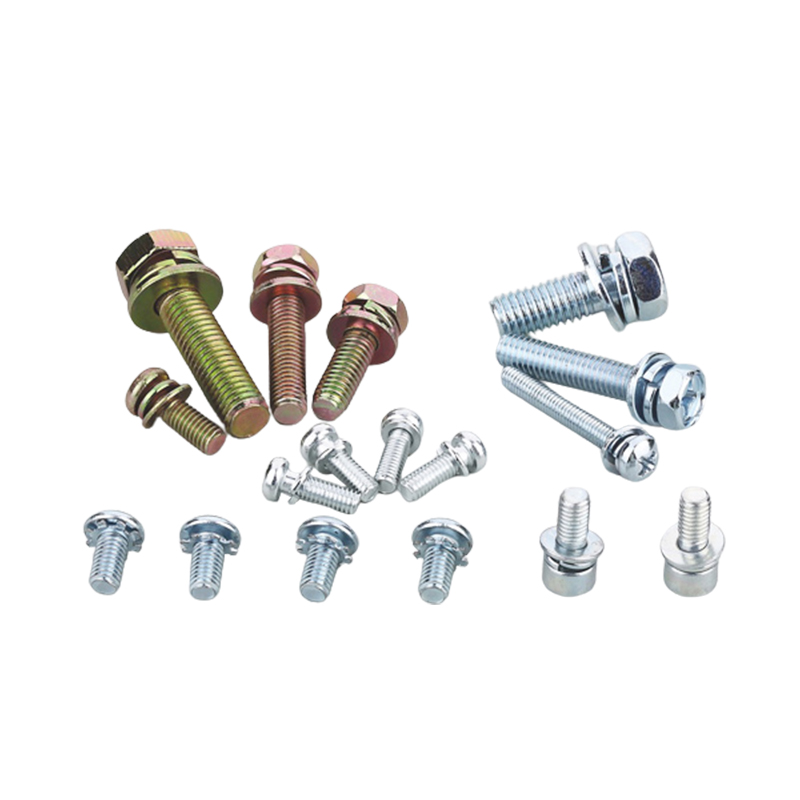 Wholesale Cross Outer Hexagonal Combination Screw Suppliers, OEM/ODM ManufactureNingbo Risheng Fastener Co., Ltd. is China wholesale Cross Outer Hexagonal Combination Screw suppliers and OEM/ODM Cross Outer Hexagonal ...View Product →
Cross Recessed Hexagon Recessed Three Combination Screws
When a joint needs load distribution and strong vibration resistance at the same time, a three-combination screw carrying a spring washer plus a flat washer is the safer pick. The hexagon recess accepts both hex and cross drivers, which simplifies tooling on mixed assembly lines. Our cross recessed hexagon recessed three combination screw is the clearest example of this configuration. For teams that prefer an internal-hex drive with a simpler washer set, the hexagon recessed double combination screw covers similar ground with fewer components.
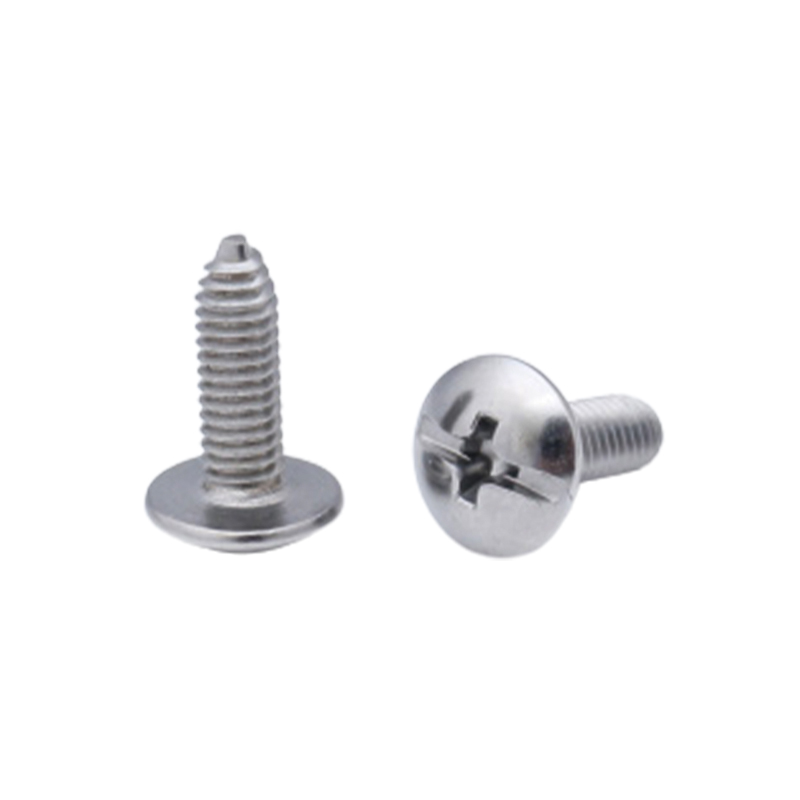
Stainless Steel Combination Screws
In humid environments, food-processing equipment, or outdoor products with limited protection, stainless steel removes the worry of plating wear. Because the corrosion resistance comes from the material itself rather than a surface coating, this grade keeps its performance even where the fastener is scratched, cleaned, or exposed to condensation. For those conditions, choose a stainless steel combination screw for dependable service over a long product life.
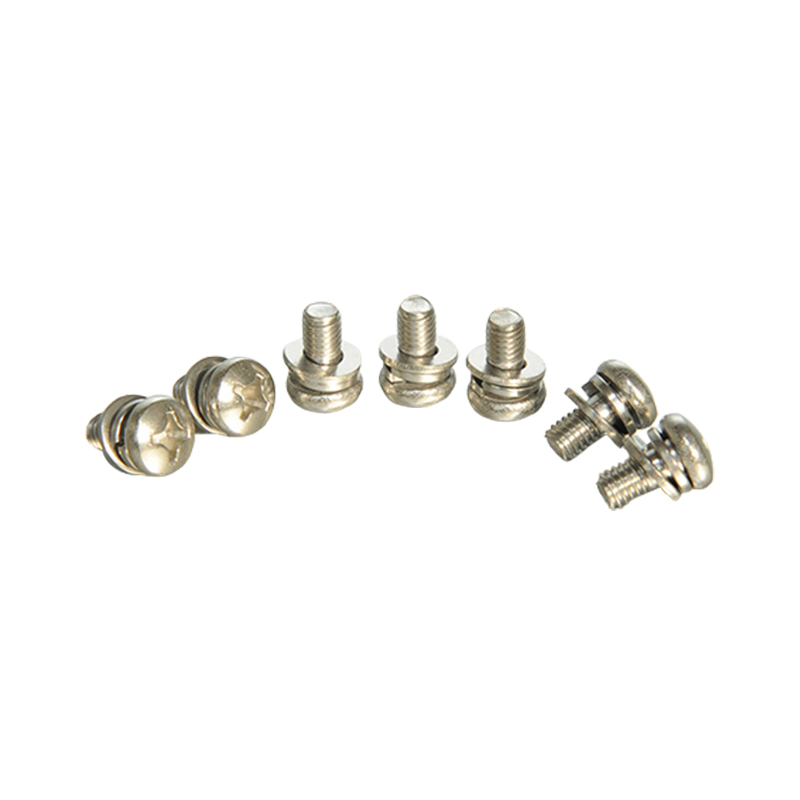 Wholesale Stainless Steel Combination Screw Suppliers, OEM/ODM Manufacturers - NNingbo Risheng Fastener Co., Ltd. is China wholesale Stainless Steel Combination Screw suppliers and OEM/ODM Stainless Steel Combination ...View Product →
Material, Finish, and Standard Considerations
Material selection starts with strength class and working environment. Carbon steel in property classes such as 8.8 or 10.9 is the workhorse for mechanical and structural joints, and the washers must be hardened so they keep their elasticity under clamping load. Alloy steel adds strength for higher-torque applications, while 410 stainless steel is chosen when corrosion resistance is the deciding factor. Whatever the base material, the washer must be matched to the screw in hardness and finish; otherwise the combination can loosen or corrode prematurely. For a pre-assembled part, washer and screw should also share the same finish system so galvanic differences do not create premature corrosion.
Surface finish determines how the fastener behaves in its environment. Common options include blue-white zinc for clean indoor assemblies, yellow or color zinc for better corrosion protection, black zinc for low-reflection products, and Dacromet where salt-spray resistance and low hydrogen-embrittlement risk are critical. For automotive and outdoor applications that demand this higher level of protection, we produce Dacromet coated screws with pad as part of the combination screw range.
| Finish | Key Benefit | Typical Application |
|---|---|---|
| Blue-white zinc | Clean appearance, moderate corrosion resistance | Indoor equipment, electronics, appliances |
| Yellow / color zinc | Better corrosion resistance than white zinc | Automotive brackets, industrial assemblies |
| Black zinc | Consistent matte black, low reflection | Optical devices, consumer products |
| Dacromet | High salt-spray resistance, low hydrogen-embrittlement risk | Automotive fasteners, outdoor structures |
Standards complete the specification. Combination screws are manufactured to GB, DIN, and ISO dimensional and performance requirements, and our production complies with ROHS environmental limits. Because these systems share many dimensional conventions for thread series and head geometry, a fastener designed for one standard can usually be produced to another with minimal tooling change. When you send a drawing or sample, the correct standard can be confirmed against the actual thread size, washer hardness, and tightening torque specified for the joint.
How Are Combination Screws Manufactured and Quality-Tested?
The production of combination screws with washer runs through a continuous chain that starts with cold heading. Wire is formed into the head and shank, then heat-treated and tempered to reach the required hardness and strength. Thread rolling follows, forming the thread without cutting so the metal grain structure stays intact. After surface treatment, an automatic washer assembly machine presses the washer onto the screw; the machine controls seating pressure and orientation, so the washer is retained firmly enough to survive shipping but still free to rotate during tightening. A sorting system then rejects parts with damaged threads, missing washers, or coating defects before packing.
Quality control is where the pre-assembled washer design is truly proven. Our in-house laboratory runs torque tests to confirm driving and clamp behavior, tensile tests to verify strength, salt-spray tests to check coating performance, Rockwell hardness checks on both screw and washer, and dimensional projection inspection for head geometry and thread profile. We can also test the combination the way the customer will use it, such as driving the screw into a sample workpiece to confirm that the washer behaves correctly under real tightening conditions. Because the test equipment belongs to the factory, a batch can be verified before shipment instead of discovering a problem at your incoming inspection.
Daily production is supported by a facility of about 22,000 square meters and roughly 120 employees, serving export markets in Europe, the Americas, and Japan since 1984. For a component as detail-sensitive as a combination screw with washer, that history shows up in consistent head dimensions, stable washer retention, and coatings that survive transit and storage.
How to Choose the Right Combination Screws with Washer for Your Project
Selection is a sequence of decisions rather than a single guess. Working through these five steps with your engineering team will make the fastener specification much easier to defend.
- Define the service condition. Is the joint exposed to vibration, moisture, heat, or chemicals? The answer determines whether you need a spring washer, a tooth lock washer, or a corrosion-resistant material.
- Select the washer configuration. Choose single, double, or three combination based on whether the problem is load spread, vibration loosening, or both.
- Match material and finish to the environment. Carbon steel with zinc plating covers most indoor uses; stainless steel or Dacromet suits demanding outdoor and washdown conditions.
- Confirm the standard and dimensions. Thread size, length, head style, and the applicable GB, DIN, or ISO standard must be fixed before ordering.
- Verify supplier capability. Ask for test reports and confirm that the factory supports custom development from drawings or samples, including changes to head shape, washer type, or finish.
When the choice is uncertain, a manufacturer that runs its own test equipment can advise on the trade-offs. Send the drawing, the sample, or the service condition, and the specification will be reviewed against actual production capability rather than a generic catalog answer. Requesting a pre-production sample is the fastest way to confirm head geometry, washer retention, and finish before committing to a full order.
Conclusion
Combination screws with washer solve a real production problem: they cut assembly time, prevent missing-washer defects, and make bolted joints more predictable under vibration. The value is threefold — lower assembly cost, more consistent clamp performance, and a simpler supply chain because screw and washer arrive as one part number. For standard sizes and thread forms, existing tooling allows fast response; for custom projects, our factory can develop the washer configuration to your drawing and validate it with the same torque, tensile, and salt-spray tests used for our standard lines. Share your drawings or sample specifications with us, and we will recommend the combination screw with washer that fits both your joint and your budget.